
From websites and emails to social posts and online ads, digital marketing only works if people can experience it. When content isn’t accessible, it isn’t available—no matter how compelling or creative it may be.
What Every Marketer Needs to Know About Accessibility Standards
When it comes to accessibility best practices, there’s one source of truth digital marketers everywhere can rely on: the Web Content Accessibility Guidelines (WCAG). Created by the World Wide Web Consortium (W3C), WCAG serves as a framework for ensuring websites and digital content can be used by people with visual, auditory, motor and cognitive disabilities.
Most organizations aim to meet WCAG 2.1 Level AA, which strikes a balance between accessibility and design flexibility. In practice, these guidelines help teams avoid design and content choices that accidentally make things harder for people to use.
While WCAG includes a lot of technical detail, they’re broadly based on four core principles commonly known as POUR:
- Perceivable: People can see or hear the content.
- Operable: People can navigate and interact with it.
- Understandable: The content is clear and functionality is predictable.
- Robust: It works across devices, browsers and assistive tools.
Clear Communication Starts with Accessible Design
Accessibility guidelines exist to help more people successfully experience your content, not to limit creativity. These quick and actionable tips will help make sure your message reaches as many people as possible.
Visibility comes first.
One of the most common accessibility challenges involves contrast, and these issues are becoming even more apparent as more and more users opt for dark mode. Low contrast can make things hard to read for people with low vision or color blindness.
Visibility best practices:
- Make sure text stands out clearly from its background.
- Don’t rely on color alone to communicate meaning.
- Test designs in both light and dark environments.
- Use flexible color systems that stay readable in different settings.
Alt text makes a big difference.
Alt text is short copy that serves as a substitute for images. This helps screen readers describe visual elements to people who can’t see them. It also provides context when images don’t load properly.
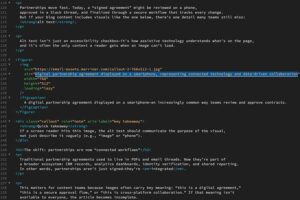
Alt text best practices:
- Keep alt text short and descriptive.
- Focus on what the image is meant to communicate.
- Skip phrases like “image of” or “picture of.”
- Use null or empty alt text for purely decorative images.
Simple layouts are easier to read and understand.
They way content is laid out affects how easily people can scan, read and understand it.
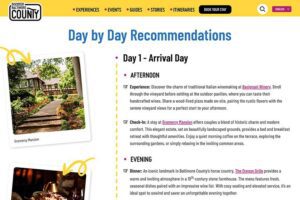
Layout best practices:
- Choose legible fonts and comfortable font sizes.
- Use spacing between lines and sections.
- Break up long text with headings and bullet points.
- Stick to clear, straightforward language.
Navigation should feel effortless.
Remember: not everyone uses a mouse or touchscreen. Some people rely on keyboards, screen readers or other assistive tools to move through your information.

Navigation best practices:
- Use a clear heading structure.
- Make sure links and buttons are easy to see when selected.
- Use descriptive link text instead of “click here.”
- Keep navigation patterns consistent.
Better Access Means Better Marketing
Designing with accessibility in mind means you’re making smarter choices that benefit everyone. When accessibility is part of the plan from the start, marketing works better. Content is clearer. Experiences feel smoother. And messages reach more people.
At Marriner, we believe accessibility works best when it’s built into digital and integrated marketing strategies, not added as an afterthought. Book a call to see how thoughtful, inclusive design will helps your brand communicate more clearly and reach more people in the process.
Sources:
Web Content Accessibility Guidelines, World Wide Web Consortium.