
Search is changing fast, especially for foodservice and travel brands. More people are getting the answers they need from AI summaries and conversational tools, often without ever clicking through to a website. That means showing up on page one isn’t the guarantee it used to be. To stay visible, brands need to focus on delivering clear, trustworthy information that AI can confidently surface and users can rely on.
This guide walks through what’s shifting in search and how you can strengthen your brand signals, build credibility and stay discoverable as ChatGPT and Claude becomes a bigger part of the customer journey.
What’s Changing in Search: AI Summaries, Zero-Click Results and Evolving Behavior
Visibility is moving beyond blue links. AI-powered summaries and “answer boxes” are rapidly replacing traditional link results. A recent study shows that a whopping 58% of U.S. Google searches in the U.S. end in zero clicks.
Now more than ever, it’s all about being the trusted answer wherever AI and users search. Google’s new guidelines emphasize that helpful content is people-first, written by those with clear experience or expertise and supported by transparent sourcing.
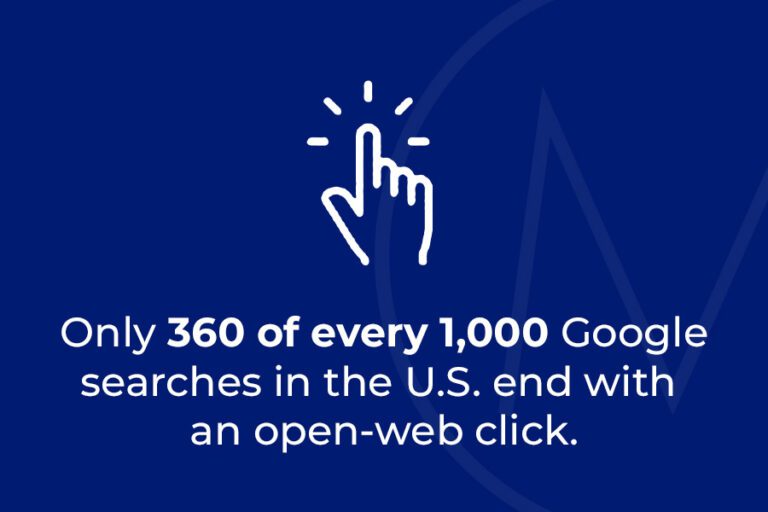
Only 360 of every 1,000 Google searches in the U.S. end with an open-web click.
Content should answer the “Who, How, and Why” behind its creation—who wrote it, how it was produced, and why it exists. Whether ranking in traditional search or being summarized in an AI response, brands demonstrating real-world experience and authority will dominate.
How Do AI Systems Evaluate Your Brand?
Strengthening your food, beverage or travel brand’s visibility in search isn’t all that different from strengthening its reputation with customers—it comes down to trust. AI systems like ChatGPT and Claude rely on trust signals to determine which sources to cite. These signals closely mirror the pillars of EEAT (Experience, Expertise, Authoritativeness and Trustworthiness), a framework used in Google’s search quality guidelines.
Using EEAT to Increase Visibility
- Experience: Highlight first-hand knowledge with content built on actual testing, professional use or lived expertise.
- Expertise: Show deep topical understanding supported by clear author credentials and consistent subject focus.
- Authoritativeness: Focus on recognition by others through citations, backlinks, mentions and association with credible publications
- Trustworthiness: Be transparent—accurate sourcing, contact information and editorial integrity make a big impact.

Use clear, consistent signals of authorship and expertise across all channels by applying structured data, keeping names and metadata aligned, showing author bios and dates, and backing content with credible sources and real-world evidence.
How Can Foodservice and Travel Brands Adapt Search Strategies for AI?
Shifting your approach can seem overwhelming—but it all starts with a simple model. By adapting, expanding and monitoring, you’re setting your brand up for AI-powered search success.
- Adapt: Use your new understanding of AI-powered search to make your content more readable and credible. Start with:
- Following the EEAT principles highlighted above.
- Adding schema markup. This structured data includes product snippets, merchant listings, FAQs and more.
- Using conversational, question-based headlines.
- Including transcripts and chapter markers in video content.
- Expand: Make sure your strategy doesn’t rely solely on Google.
- Build a presence where your customers are likely to discover information, like YouTube, Reddit, TikTok and other AI engines.
- Continue to create content that gives your customers what they’re looking for—like educational videos or articles that answer category-level questions.
- Strengthen credibility by engaging in community discussions and collaborations.
- Monitor: Think beyond clicks.
- Track zero-click exposure by looking at the number of times your brand appears on a search engine results page (SERP) instead of sessions only.
- Keep a close eye on brand inclusion in AI overviews and conversational engines.
- Monitor mentions, backlinks, author citations and other EEAT performance indicators.
Putting Your AI Search Strategy Into Action: A Practical Roadmap
An easy-to-follow action plan will help you transform the way you’re using search as a tool for your brand. Use this checklist to build an online presence that’s recognized by both users and AI as a reliable authority in your category.
Short Term (30-90 Days)
- Start by looking at your current strategy—audit schema, structured data and transcripts across your brand’s high-traffic pages.
- Add author bios, cite firsthand experience and update your top-performing pages for EEAT compliance.
- Next, identify your target audience’s top 50 question-based queries and check their AI Overview presence.
- Use these questions to inform a “how-to” or explainer content series optimized for conversational search.
Mid Term (3-12 Months)
- Create “Answer Hubs” organized by user intent and expertise topic.
- Publish at least one original research or insights report to establish authority.
- Begin reporting on zero-click and AI visibility trends monthly.
- Build credibility ecosystems: nurture expert contributors, secure citations and align PR and SEO to reinforce brand authority.
Long-Term (12+ Months)
- Make AI-search visibility part of your marketing roadmap and editorial process.
- Do a quarterly consistency check—ensure your brand and products are represented accurately and across trusted sources.
- Institutionalize EEAT: make trust, authorship, and credibility integral to your brand governance.
Ready to Make Your Brand the Trusted Choice in Every Search Journey?
As AI’s role in search continues to grow, the brands that win will be the ones that show clear expertise, real experience and a consistent presence wherever audiences look for answers. By putting these principles into practice now, you can stay ahead of the curve—strengthening trust, improving discoverability and building authority.
Need help planning or executing your strategy? Book a call with us to start the conversation.
Sources:
“Study: Nearly 60% of Google Searches End with Zero Clicks,” Cybernews, July 2024.
“2024 Zero-Click Search Study,” SparkToro, July 2024.